DOC URL Testing - ربی - Reserve Bank of India







Governor
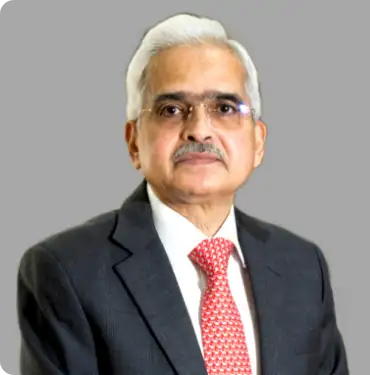
Shri Shaktikanta Das
Shri Shaktikanta Das, IAS Retd., former Secretary, Department of Revenue and Department of Economic Affairs, Ministry of Finance, Government of India assumed charge as the 25th Governor of the Reserve Bank of India effective December 12, 2018. Immediately prior to his current assignment, he was acting as Member, 15th Finance Commission and G20 Sherpa of India.
Shri Shaktikanta Das has vast experience in various areas of governance in the last 38 years. Shri Das has held important positions in the Central and State Governments in the areas of Finance, Taxation, Industries, Infrastructure, etc.
During his long tenure in the Ministry of Finance, Government of India, he was directly associated with the preparation of as many as 8 Union Budgets. Shri Das has also served as India’s Alternate Governor in the World Bank, Asian Development Bank (ADB), New Development Bank (NDB) and Asian Infrastructure Investment Bank (AIIB). He has represented India in international fora like the IMF, G20, BRICS, SAARC, etc.
Shri Shaktikanta Das is a postgraduate from St. Stephen’s College, Delhi University.
Chair/Member of

Organisation Name
Lorem ipsum dolor sit amet, pas consetetur sadipscing elitr, sed diam nonumy eirmod.
Organisation Name
Lorem ipsum dolor sit amet, pas consetetur sadipscing elitr, sed diam nonumy eirmod.

Organisation Name
Lorem ipsum dolor sit amet, pas consetetur sadipscing elitr, sed diam nonumy eirmod.
Contact Information
-
 Reserve Bank Of india
18th floor, Central Office Building, Shahid Bhagat Singh Road,
Mumbai-400 001 -

022-22661872
-

22661784
Listofpreviousgovernors

Dr. Mridul Kumar Saggar
- Jul 1, 2020 - Apr 29, 2022
Lorem ipsum dolor sit amet, consectetur adipiscing elit, sed do eiusmod tempor incididunt ut labore et dolore magna aliqua. Ut enim ad minim veniam, quis nostrud exercitation ullamco laboris nisi ut aliquip ex ea commodo consequat
Smt. Indrani Banerjee
- Mar 2, 2020 - Nov 30, 2020
Lorem ipsum dolor sit amet, consectetur adipiscing elit, sed do eiusmod tempor incididunt ut labore et dolore magna aliqua. Ut enim ad minim veniam, quis nostrud exercitation ullamco laboris nisi ut aliquip ex ea commodo consequat.
Shri P. Vijayakumar
- Mar 2, 2020 - May 31, 2021
Lorem ipsum dolor sit amet, consectetur adipiscing elit, sed do eiusmod tempor incididunt ut labore et dolore magna aliqua. Ut enim ad minim veniam, quis nostrud exercitation ullamco laboris nisi ut aliquip ex ea commodo consequat.
Dr. Janak Raj
- Jan 24, 2020 - Jun 30, 2020
Lorem ipsum dolor sit amet, consectetur adipiscing elit, sed do eiusmod tempor incididunt ut labore et dolore magna aliqua. Ut enim ad minim veniam, quis nostrud exercitation ullamco laboris nisi ut aliquip ex ea commodo consequat.

Shri T. Rabi Sankar
- Dec 2, 2019 - May 2, 2021
Lorem ipsum dolor sit amet, consectetur adipiscing elit, sed do eiusmod tempor incididunt ut labore et dolore magna aliqua. Ut enim ad minim veniam, quis nostrud exercitation ullamco laboris nisi ut aliquip ex ea commodo consequat.
speeches
It gives me great pleasure to be here at the 4th edition of the Global FinTech Festival (GFF). I compliment the organisers for bringing all stakeholders of the FinTech ecosystem together for this three-day event with the aim of achieving a common goal of inclusive, resilient, and sustainable financial system. It would be obvious to state that innovation is the bedrock of the FinTech industry. Events such as these festivals enable sharing of knowledge and ex

interviews
Participants from the RBI: Shri Shaktikanta Das – Governor, Reserve Bank of India Dr. Michael D. Patra – Deputy Governor, Reserve Bank of India Shri M. Rajeshwar Rao – Deputy Governor, Reserve Bank of India Shri T. Rabi Sankar – Deputy Governor, Reserve Bank of India Shri Swaminathan J. – Deputy Governor, Reserve Bank of India Dr. Rajiv Ranjan – Executive Director, Reserve Bank of India Moderator: Shri Puneet Pancholy – Chief General Manager, R
Participants from the RBI: Shri Shaktikanta Das – Governor, Reserve Bank of India Dr. Michael D. Patra – Deputy Governor, Reserve Bank of India Shri M. Rajeshwar Rao – Deputy Governor, Reserve Bank of India Shri T. Rabi Sankar – Deputy Governor, Reserve Bank of India Shri Swaminathan J. – Deputy Governor, Reserve Bank of India Dr. Rajiv Ranjan – Executive Director, Reserve Bank of India Moderator: Shri Puneet Pancholy – Chief General Manager, R
Participants from the RBI: Shri Shaktikanta Das – Governor, Reserve Bank of India Shri M. K. Jain – Deputy Governor, Reserve Bank of India Dr. Michael D. Patra – Deputy Governor, Reserve Bank of India Shri M. Rajeshwar Rao – Deputy Governor, Reserve Bank of India Shri T. Rabi Sankar – Deputy Governor, Reserve Bank of India Dr. O. P. Mall – Executive Director, Reserve Bank of India Dr. Rajiv Ranjan – Executive Director, Reserve Bank of India Moderator: Shri Yogesh Daya
Governor, Shri Shaktikanta Das delivered the 17th K P Hormis Commemorative Lecture on ‘G20 for a Better Global Economic Order during India’s Presidency’ at Kochi on March 17, 2023. After the lecture, the Governor interacted with the audience. The edited excerpts of the interaction are placed below. Moderator: Thank you, sir. The forum is open to questions. If you have any, kindly raise your hand. Gayathri Suresh, FISAT Business School: Good afternoon, sir. My name is
Moderator: Hello, ladies and gentlemen, I don't think I need to introduce the RBI Governor to you. All of you know him, so we can get started straight away. Mr. Das, thank you very much for finding the time today. Has it been the most challenging year of your tenure or would you say the COVID year 2020 was more challenging? Shaktikanta Das: Every challenge in a particular context looks more challenging than the previous one. There were so many situations when I was a
Participants from RBI: Shri Shaktikanta Das – Governor, Reserve Bank of India Shri M. K. Jain – Deputy Governor, Reserve Bank of India Dr. Michael D. Patra – Deputy Governor, Reserve Bank of India Shri T. Rabi Sankar – Deputy Governor, Reserve Bank of India Dr. O. P. Mall – Executive Director, Reserve Bank of India Shri Saurav Sinha – Executive Director, Reserve Bank of India Shri R. Subramanian – Executive Director, Reserve Bank of India Dr. Rajiv Ranjan – Executive
Sukumar Ranganathan Good afternoon, everyone. I have with me Mr. Shaktikanta Das, who really needs no introduction, the Governor of the Reserve Bank of India; and I think we can all safely say that his has been one of the reassuring voices, every time when he comes on television to present his policy, especially over the last two years in the course of the pandemic. The Bank has seen us through a really tough phase, and there are challenges ahead, so he and I are goin
Participants from RBI: Shri Shaktikanta Das – Governor, Reserve Bank of India Shri M. K. Jain – Deputy Governor, Reserve Bank of India Dr. Michael D. Patra – Deputy Governor, Reserve Bank of India Shri M. Rajeshwar Rao – Deputy Governor, Reserve Bank of India Shri T. Rabi Sankar – Deputy Governor, Reserve Bank of India Dr. O. P. Mall – Executive Director, Reserve Bank of India Dr. Rajiv Ranjan – Executive Director, Reserve Bank of India Moderator: Shri Yogesh Dayal –


Financial inclusion and development 2612 02
Like individual consumers, businesses and organisation of all kinds, banks need their own mechanism to transfer funds and settle inter-bank transaction-such as borrowing from and lending to other banks-and customer transactions. As the banker to banks, the Reserve Bank fulfills this role.
Since its inception, Reserve Bank of India has undertaken the traditional central banking function of managing the government’s banking transactions. The Reserve Bank of India Act, 1934 requires the Central Government to entrust the Reserve Bank with all its money, remittance, exchange, and banking transactions in India. The Reserve Bank may also, by an agreement, act as a banker to State Governments.
The Reserve Bank has well defined obligations and provides several banking services to the Governments. As a banker to the Government, the Reserve Bank receives and pays money on behalf of the various Government Departments. It provides Ways and Means Advances – a short-term interest-bearing advance – to the Governments, to meet temporary mismatches in their receipts and payments. Besides, like a portfolio manager, it also arranges for investment of surplus cash balances of the Governments. The Reserve Bank acts as an adviser to the Government, whenever called upon to do so, on monetary and banking related matters. The Central Government and State Governments may make rules for the receipt, custody and disbursement of money from the consolidated fund, contingency fund, and public account. These rules are legally binding on the Reserve Bank as accounts for these funds are with the Reserve Bank.
The banking functions for the Governments are carried out by the Government Banking Divisions at the offices/branches of the Reserve Bank. As it has offices and sub-offices in 34 locations, the Reserve Bank appoints other banks to act as its agents for undertaking the banking business on behalf of the Governments. The Reserve Bank pays commission to the agency banks for the same. Final compilation of Government accounts, of the Centre and the States, is done at Central Accounts Section, Nagpur office of the Reserve Bank.
Banks are also required to maintain a portion of their demand and time liabilities as cash reserves with the Reserve Bank. For this purpose, they need to maintain current account with the Reserve Bank. The current account of the banks is opened by the Banking Departments of the Reserve Bank’s Regional offices. The Department of Government and Bank Accounts (DGBA) issues general guidelines for opening the current accounts.

Monetary Policy


Install the RBI mobile application and get quick access to the latest news!
Scan the QR code to install our app